
Canadian winters vary considerably by region, but in most of the country they involve extended periods below freezing, significant freeze-thaw cycling in spring and fall, and some combination of snow accumulation and ice. Most outdoor furniture materials are vulnerable to at least one of these conditions if left unprotected or improperly stored.
This article covers pre-winter preparation and spring inspection routines organized by material type. The timing references are approximate — specific dates depend on your province and local climate history. As a general rule, preparation should be complete before the first hard freeze (sustained temperatures below −5°C overnight).
Pre-winter preparation: when to start
In most of Canada, the preparation window runs from mid-October to early November. In Zone 3 provinces (Saskatchewan, Manitoba, parts of Alberta and northern Ontario), that window opens earlier — late September is more appropriate. On the BC coast and in southern Ontario's Zone 7 pockets, there is more flexibility, but preparation before mid-November is still advisable.
A common mistake is waiting until a cold snap arrives to begin the process. At that point, cleaning products dry incorrectly in cold temperatures, wood treatments do not penetrate properly, and covers applied over dirty furniture can trap moisture and cause more damage than no cover at all.
Teak
Cleaning
Wash with warm water and a mild dish soap using a soft brush. Remove any mildew spots with a diluted solution of one part white vinegar to four parts water — not bleach, which strips the wood's natural oils and affects colour unevenly. Rinse thoroughly and allow 48 hours to dry completely before any treatment.
Treatment options
Untreated teak going into winter does not need oil or sealer applied — the natural oils handle freezing temperatures well without intervention. If you apply teak oil to maintain the warm brown colour, do it in early October while temperatures are still above 10°C so the oil penetrates and cures before the cold arrives.
Storage
Teak can remain outdoors in Canadian winters with a breathable, waterproof cover. The key word is breathable — plastic tarps trap condensation and promote mildew. Purpose-made outdoor furniture covers in polyester with ventilation panels are the appropriate choice. If storing indoors, a dry, unheated garage is ideal; a heated interior will dry out the wood more than outdoor winter conditions.
Powder-coated aluminum
Cleaning
Aluminum requires minimal pre-winter preparation. Wash with warm water and mild soap, paying attention to any joints and welds where dirt accumulates. Inspect the powder coat for chips — any exposed aluminum should be touched up with automotive primer or touch-up paint rated for metal to prevent oxidation forming under the coating edge.
Winter behaviour
Aluminum contracts slightly in cold but does not crack or warp under normal winter conditions. It can stay outdoors year-round without structural damage. The practical reason to use covers is to protect the powder coat from UV degradation and salt spray, not from cold temperatures. In coastal provinces (Nova Scotia, New Brunswick, PEI) and near salt-treated roads in urban areas, covers provide meaningful protection against coating erosion.
Storage
Stackable aluminum chairs can be stored on the porch or in a covered area with minimal floor space. Dining tables and loungers benefit from covers but do not require indoor storage in most zones.
HDPE lumber
HDPE is arguably the most winter-resilient outdoor furniture material available in Canada. The plastic does not absorb water, so freeze-thaw cycles have no meaningful structural effect. It does not mildew, rot, or corrode. UV exposure over many years will eventually cause surface fading, but Canadian UV levels in winter are low enough that this is a summer-season concern rather than a winter one.
Pre-winter routine
Wash with soap and water. Check any metal hardware (bolts, brackets, cushion clips) — these are typically stainless steel on quality HDPE furniture but worth inspecting for rust signs. If cushions are attached, remove and store them indoors.
Storage
HDPE furniture can stay outdoors through winter without covers in most Canadian zones. Covers are optional. Indoor storage is not necessary and does not extend the furniture's lifespan meaningfully.
Synthetic wicker
Synthetic wicker (resin wicker over a metal frame) tolerates cold better than natural rattan but has two vulnerabilities in Canadian winters: the weave can become brittle in severe cold (below −20°C), and the frame — particularly if steel rather than aluminum — can develop rust at joint points where the coating is thinnest.
Pre-winter routine
- Clean with warm water and a soft cloth — avoid high-pressure washing, which can force water into the weave and behind the frame coating
- Inspect all visible joint points on the frame for coating chips or early rust formation
- Remove and store cushions indoors — outdoor cushion foam does not recover well from extended compression under snow weight
Storage by zone
- Zones 7–8 (BC coast, southern Vancouver Island): outdoor storage with breathable covers is adequate
- Zones 5–6 (southern Ontario, southern Quebec): covered outdoor storage is acceptable, but indoor garage storage extends lifespan noticeably
- Zones 3–4 (Prairies, northern Ontario): indoor storage is strongly recommended — sustained −25°C and below will stress the resin weave
Cedar and pressure-treated pine
Pre-winter cleaning
Wash cedar furniture thoroughly and inspect for any areas where the wood grain has opened or checking has begun. Small checks are cosmetic; large ones that go into the joint area can allow water infiltration that freezes and expands, widening the crack over winter.
Sealing
Cedar and pressure-treated pine benefit from a penetrating sealer (not a film-forming varnish or polyurethane) applied in September or early October while temperatures permit. A penetrating sealer allows the wood to breathe while reducing moisture absorption. Products labelled as "exterior wood sealer" or "deck oil" at Canadian hardware retailers are appropriate — apply according to manufacturer directions, which typically require a dry surface and temperature above 10°C.
Storage
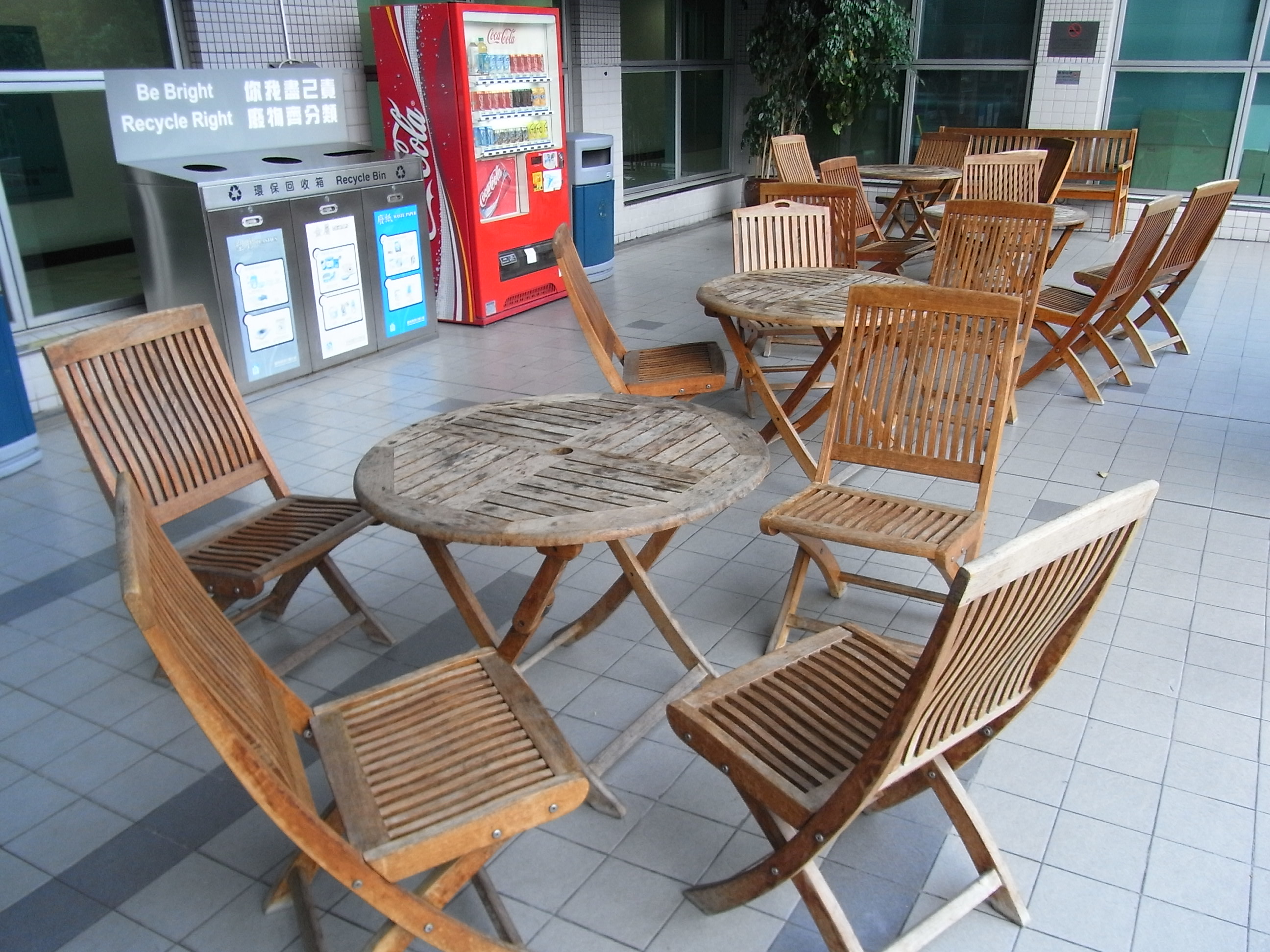
Wood furniture should not remain in direct contact with snow or standing water. If leaving outdoors, raise pieces onto blocks to allow drainage underneath, or store them elevated in a covered porch. A dry garage is ideal. Furniture left flat on a wet deck through winter will rot at the contact points within two to three seasons regardless of treatment.
Spring inspection
When outdoor furniture comes out of storage in April or May, a brief inspection before returning it to regular use is worthwhile. Specific things to check:
- Wood: new or widened checks, soft spots at joints, mildew under any fabric or cover that was in direct contact with the wood
- Aluminum: chips in the powder coat; corrosion under any chips found; hardware that has seized
- HDPE: hardware rust; any unusual flexing in joints indicating a bracket has cracked over winter
- Synthetic wicker: weave segments that have become brittle or broken; frame joint rust; loose connections where the weave attaches to the frame
Minor issues addressed in spring — a touch of touch-up paint, a wood treatment, replacement of a single bolt — typically prevent more significant repairs in year three or four. The Natural Resources Canada climate data tools are useful for understanding how local temperature extremes translate to material stress in specific provinces.
Cushions and soft furnishings
Outdoor cushion foam is rated differently from indoor foam — quality outdoor cushions use open-cell foam that drains water rather than absorbing it. Even so, cushions stored outdoors through a Canadian winter will absorb moisture and may not fully dry before the outdoor season begins, resulting in mildew odour and reduced structural integrity of the foam over time.
The standard recommendation is to store cushions indoors through winter, ideally in breathable storage bags rather than sealed plastic containers. If indoor space is limited, a dry garden shed or garage outperforms leaving them outdoors under a tarp — the tarp creates the condensation problem that the foam is trying to avoid.